From Chaos to Calm: How AI on My Phone Changed Everything
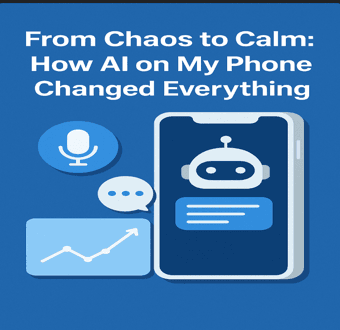
Every morning, the first thing I reach for is not my toothbrush or my cup of tea—it’s my phone. It’s become more than just a device for calls or messages. With all the AI tools built into it, it feels like a personal assistant, a guide, and sometimes even a friend. I never imagined I would rely on it this much, but now I realize how much easier it makes my life.
When I wake up, it’s not just a plain alarm. Google Assistant adjusts my wake-up time based on my sleep cycle, thanks to a sleep-tracking app that works quietly in the background. If I’ve gone to bed late, it gives me an extra half hour. If I have an early meeting, it makes sure I’m up in time. I no longer wake up groggy—it feels like my phone actually cares about how I start my day.
The first words I usually speak are, “Hey Google, what’s the weather today?” In seconds, I get the forecast, air quality, and even a gentle reminder like, “Don’t forget your umbrella—it might rain later.” On hot days, it suggests carrying a water bottle. I never thought I’d care so much about these details, but they save me from small frustrations.
Breakfast used to be random—whatever was quick. Now, I just ask ChatGPT on my phone, “Suggest a healthy breakfast with low sugar using bread and eggs,” and it gives me three or four quick recipes. Sometimes YouTube Shorts shows me a 2-minute cooking demo. Cooking feels less like a burden and more like an interactive class.
Work has also changed. My phone syncs everything using Microsoft Outlook and Google Calendar. If I feel overwhelmed, I just ask Siri to list my schedule. Hearing my day broken down feels calming. Gmail’s Smart Reply drafts quick responses, saving me precious time. Honestly, it feels like I have a digital secretary in my pocket.
During meetings, I rely on Otter.ai. Instead of scribbling frantically, I record the discussion, and Otter turns it into neat transcripts. The first time I saw it, I was amazed—no more messy notes, no more missed points. AI frees me to focus on real conversations.
After work, fitness is my biggest struggle. But apps like MyFitnessPal and Google Fit keep me on track. My phone reminds me to stand, stretch, and even challenges me: “You’ve hit 5,000 steps—let’s go for 7,000 today.” It feels like I have a personal trainer cheering me on, without the gym pressure.
Learning is another area where AI shines for me. I’ve been using Duolingo to learn Spanish. It listens to my pronunciation and corrects me gently. It never gets tired of my mistakes. Sometimes, when I want a deeper explanation, I ask ChatGPT to explain grammar rules. It’s like having a patient teacher available anytime.
Shopping has become smarter too. Instead of wasting hours comparing products, I use Amazon’s AI suggestions or just ask ChatGPT: “Which power bank under ₹1000 has good reviews?” It summarizes options clearly. I save time, money, and energy.
But AI is not only about tasks—it also helps emotionally. Some nights, I feel low. When I tell Google Assistant, “I’m stressed,” it plays calming music or guides me through a short breathing exercise. Sometimes I open a journaling app with AI suggestions that help me reflect on my day. Those little nudges make me feel less alone.
Travel is another magical experience. On my last trip, I didn’t hire a guide. Instead, I used Google Translate to read menus and signboards, Google Lens to identify landmarks, and Maps to navigate. Even currency conversion happened instantly. I felt independent yet supported, as if I had a smart travel buddy.
AI has also helped my parents. They aren’t tech-savvy, but they just say, “Alexa, call Shamita,” and it dials me. For their health, Apple Health on my mom’s phone reminds her to take medicines. It even shares health updates with me. Knowing they’re looked after gives me peace of mind.
Looking back, I realize life before AI was heavier. Forgetting groceries, missing meetings, or being stuck in traffic used to stress me. Now, many of these small problems vanish quietly in the background, thanks to AI tools like Google Assistant, Siri, ChatGPT, Duolingo, MyFitnessPal, and Otter.
Sure, it’s not perfect. Sometimes Siri misunderstands me, or Maps sends me through a crowded lane. But those moments are rare compared to the comfort I get daily. I don’t see AI as “fancy tech” anymore. It’s more like electricity—something I rely on without noticing.
When people ask me, “How has AI changed your life?” I smile. It hasn’t just changed it—it has simplified it. From waking me up, guiding my health, helping me work smarter, teaching me languages, and even calming my mind, AI has become a quiet companion.
For me, AI is not about robots or sci-fi. It’s about little things: a better route to work, a reminder to drink water, a new breakfast recipe, or a calm voice when I feel low. And those small touches add up to something bigger—a life that feels easier, lighter, and more human, even with a machine’s help.